Friday, February 21, 2014

Investigations #1

     Tuberculosis (TB) is a disease that is claiming millions of lives each year. It is believed that about one third of the world’s population is infected and it is currently one of the leading causes of death in the world. TB is caused by bacteria called Mycobacterium tuberculosis. People can be infected by the bacteria and not even know that they have the disease. Some of the signs and symptoms include coughing that lasts longer than 3 weeks, productive cough (blood & mucus), weight loss, chest pains, sweating at night, and weakness. In most cases, symptoms do not appear until the victim’s immune system weakens, such as in people with HIV and people of old age.
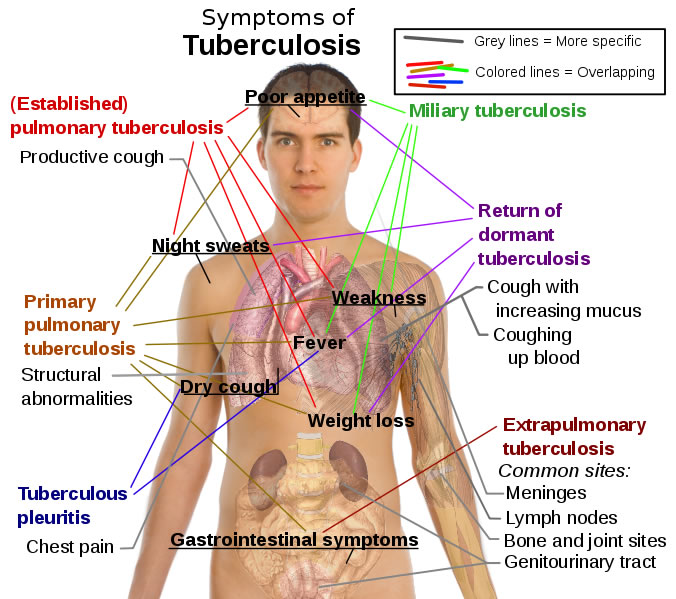
       
     M. tuberculosis is an airborne disease, where people can be infected when an infected person coughs, sneezes, or talk. The bacteria are ingested by alveolar macrophages but they are able to survive and multiply intracellularly by inhibiting phagolysosome production. Granulomas (tubercle) form from the accumulation of activated macrophages and other mononuclear phagocytes, which surrounds the infected macrophages with the bacilli. Granulomas contain and inhibit the growth of the bacilli. However, when the immune system of an infected person weakens the walls of the granuloma loses structural integrity and ruptures, allowing the bacilli to escape and spread to other organs.


To learn more about the disease visit: http://www.cdc.gov/tb/


References
Nancy A. Knechel. Tuberculosis: Pathophysiology, Clinical Features, and Diagnosis.
      CriticalCareNurse 2009; 29(2). 

Lakshimi PS, Verma D, Yang X, Lloyd B, Daniell H. Low Cost Tuberculosis 
      Vaccine Antigens in Capsules: Expression in Chloroplasts, Bio-Encapsulation, Stability, 
      and Functional Evaluation In Vitro. Plos One 2013; 8(1). 


Friday, February 14, 2014

Dictionary #2

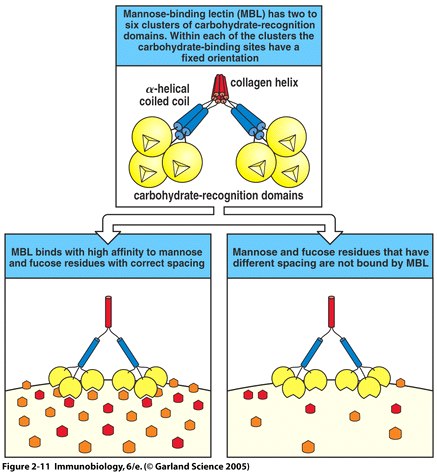
Mannose-binding lectin (MBL): A serum protein that binds to mannose in microbial cell walls and initiates the lectin pathway of complement activation.
MBL (top picture)


Hapten: A low-molecular-weight molecule that can be made immunogenic by conjugation to a suitable carrier.


Kupffer cell: A type of tissue-fixed macrophage found in the liver.


Thursday, February 6, 2014

Encounters #2


Today (2/6/14) at home, my sister showed me an article that she stumbled upon while looking through the different health articles on Google News. My sister told me to take a look at the article because not only was it interesting but it also pertained to my Immunology class. She was right, it was about a 22-year old girl named Emma who has an autoimmune disease called Systemic Scleroderma. Scleroderma affects the connective tissues in a person’s body. The disease is characterized by the chronic hardening and contraction of the skin and in some cases internal organs. What was unfortunate in Emma’s case was that she was diagnosed for many different medical problems for most of her life. According to the article, doctors could not explain the medical problems she had when she was young such as her gastrointestinal problems. In 2012, she discovered a bald spot on her head and rashes on her legs. She thought it was just a common eczema. However, she would later develop a very high fever of 104 degrees for a whole week. At first doctors diagnosed her with a fungal infection but would later find out that she has scleroderma.
            After looking up the disease, I learned that there is currently no known cause or cure for scleroderma. There are two types of scleroderma: localized, which affects only the skin tissues and systemic, which affects the skin, blood vessels, and major organs. I also learned that women are more likely to have the disease than men. The article reminded me about the reading in chapter 1 in Kuby Immunology about the broad categories of immune dysfunction or failures. Autoimmune diseases are characterized by “erroneous targeting of self-proteins or tissues by immune cells (Owen).” With the help of Scleroderma Foundation, Emma is hoping that the public would be more aware of the disease and help find the cure by donating.


Works Cited
Owen, Judith A., Jenni Punt, Sharon A. Stranford, Patricia P. Jones, and Janis Kuby. "Overview of the Immune System." Kuby Immunology. 7th ed. New York: W.H. Freeman and, 2012. 19. Print.

Patterson, Joel. "A Diagnosis Many Years in the Making - Systemic Scleroderma." NewsWorks. Web. 06 Feb. 2014.